Living on the Gulf Coast means living with water. Whether it’s a slow-moving hurricane like Laura in 2020 or a sudden flash flood triggered by a summer storm, Lake Charles homeowners know that water damage rarely gives you a warning. But not all water damage is the same and understanding the difference can save you thousands of dollars in restoration costs.
After years of serving Louisiana homeowners, one pattern keeps showing up: the families who recover fastest aren’t the ones who act hardest they’re the ones who act right. That means knowing what kind of flood you’re dealing with, what it does to your home, and what the correct response looks like.
1. What Makes Gulf Coast Flooding Unique
Lake Charles sits in one of the most flood-prone corridors in the United States. Wedged between the Gulf of Mexico and the Sabine River basin, the city is exposed to two very different types of flooding events and the water that comes through your walls during each one behaves completely differently.
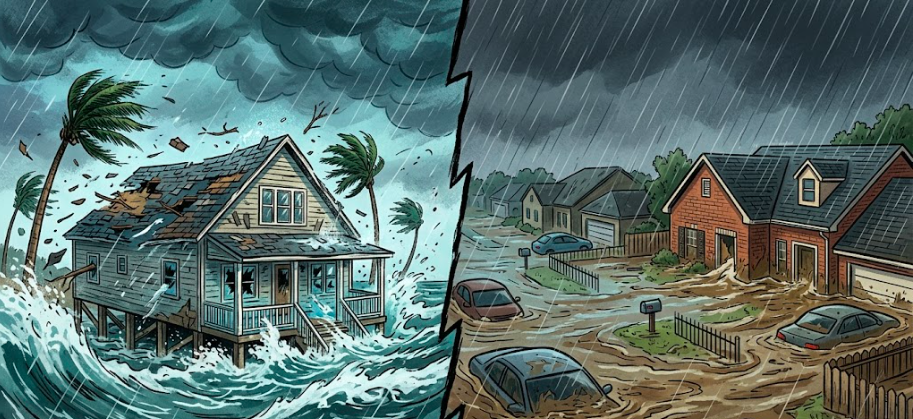
Hurricane-Driven Storm Surge vs. Localized Flash Floods
A hurricane like Laura or Ida doesn’t just bring rain. It pushes a wall of ocean water inland often 10 to 20 miles from the coast before a single raindrop falls. This storm surge is the primary driver of structural flooding in coastal parishes. The water arrives fast, rises high, and retreats slowly. By the time it drains, it has been sitting in your walls, subfloors, and insulation for hours or days.
Flash floods are different. They happen fast often within 30 to 90 minutes of a severe storm and they’re driven by drainage systems that simply can’t keep up with rainfall rates. The water source is stormwater, not ocean water, which matters for what happens next.
| Factor | Hurricane Storm Surge | Flash Flood |
|---|---|---|
| Water Source | Saltwater (ocean/Gulf) | Freshwater (stormwater runoff) |
| Advance Warning | 12–48 hours | 30–90 minutes |
| Flood Duration | Hours to days | Usually under 6 hours |
| Primary Risk | Saltwater corrosion + mold | Rapid mold onset + sewage contamination |
| Structural Impact | Foundation, framing, drywall | Flooring, lower walls, HVAC |
Saltwater Contamination Risks in Coastal Flooding
This is the detail most homeowners don’t realize until the estimate comes back higher than expected. When storm surge carries saltwater into your home, it doesn’t just wet your floors it starts a corrosion process on every metal surface it touches: fasteners, electrical components, HVAC coils, plumbing connections. Salt also binds to porous materials like drywall and wood, making proper drying more difficult and dramatically shortening the lifespan of anything that doesn’t get replaced.
Important: If your home was flooded by storm surge not just rain standard water damage protocols may not be enough. Always confirm whether the water source was saltwater or freshwater before agreeing to a restoration scope.
2. Why High Humidity Slows Down Drying
Here’s something the restoration industry doesn’t explain clearly enough: professional drying equipment doesn’t just pull water out of your walls. It creates a controlled pressure differential drier air absorbs moisture from wet materials, and dehumidifiers capture that moisture before it recirculates. The problem in Lake Charles is that the ambient air is already saturated with moisture for most of the year.
How Moisture Levels Affect Drying Equipment Performance
A standard commercial dehumidifier rated for 150 pints per day at 80°F/60% RH will produce significantly less in real Gulf Coast summer conditions often 20 to 30% less because the incoming air is already too humid to create the necessary pressure differential efficiently. This means restoration jobs that take 3 days in a temperate climate can take 5 to 6 days in Lake Charles, especially in enclosed spaces with limited airflow.
Reputable contractors here know this. They compensate by deploying more equipment per square foot, using higher-capacity low-grain refrigerant (LGR) dehumidifiers, and monitoring moisture readings multiple times per day rather than once.
Mold Window: 24–48 Hours in Gulf Coast Climate
The EPA guideline for mold growth is typically quoted as 24 to 48 hours at optimal conditions (77°F, above 70% relative humidity). In Lake Charles during summer, those conditions exist outdoors every day. Inside a flooded home with no HVAC running, temperatures can climb above 90°F within hours of power loss. That means your mold window may be under 24 hours not 48.
Climate Context: Lake Charles averages 74% relative humidity in July and August. This is not a temporary weather event it is the operating environment for every water damage restoration job during the warmest six months of the year.
3. Common Mistakes Homeowners Make After a Flood
After speaking with hundreds of Lake Charles homeowners post-flood, the same mistakes come up repeatedly. Avoiding these can save you thousands and prevent secondary damage that’s often worse than the original event.
- Waiting more than 24 hours to call a restoration company mold sets in faster here than anywhere else in the country
- Running residential box fans without professional dehumidification fans alone spread moisture and mold spores rather than removing them
- Assuming flood insurance covers everything standard homeowner’s policies typically exclude rising water; read your policy carefully before assuming you’re covered
- Discarding damaged items without documentation photograph everything before any removal for insurance purposes
- Re-entering a home after storm surge without checking structural integrity saltwater flooding can compromise foundation and flooring in ways that aren’t visible
- Calling your insurance company before cleanup starts document the damage, then begin extraction immediately; waiting for an adjuster to visit first can cost you days
- Asking contractors specifically about their LGR dehumidifier inventory this tells you whether they’re equipped for Gulf Coast conditions
- Getting a written scope of work that specifies moisture content targets not just equipment placement
4. What to Look for in a Gulf Coast Restoration Company
Not every restoration contractor is equipped to work in Gulf Coast conditions. The certification standards, equipment requirements, and protocols that apply to a flood job in Dallas or Atlanta don’t account for the specific challenges of coastal Louisiana the saltwater exposure, the sustained humidity, or the post-hurricane logistics of operating without power or with limited road access.
When evaluating a restoration company after water damage in Lake Charles, here are the questions that matter most:
- Do they carry IICRC S500 certification specifically, not just general contractor licensing
- Can they confirm how many LGR dehumidifier units they can deploy to your job within 24 hours
- Do they use thermal imaging cameras to detect moisture behind walls and ceilings
- Do they provide daily moisture log reports during the drying process
- Have they worked on saltwater-affected properties specifically, not just interior water damage
Related
This challenge isn’t isolated to Lake Charles. Homeowners across the Gulf Coast face the same combination of humidity, heat, and rapid storm onset. Restoration crews serving the Rio Grande Valley including those handling water damage in McAllen TX – encounter nearly identical structural drying conditions, which is why rapid extraction and dehumidification protocols are standard practice for any reputable Gulf Coast operator. The equipment, the timelines, and the mold risk profile are all shaped by the same Gulf climate.
What separates a good Gulf Coast restoration contractor from a generic one isn’t their marketing it’s the details of how they work. Ask for references from jobs completed specifically after hurricane events, not just pipe bursts or appliance leaks. The protocols are different, and experience matters.
5. Final Thoughts
Gulf Coast flooding is not a single event type it’s a spectrum of scenarios, each with its own risks, timelines, and restoration requirements. Whether you’re dealing with the slow devastation of storm surge or a rapid flash flood that catches you off-guard on a Tuesday afternoon, the principles are the same: act fast, document everything, and work with contractors who understand what the Gulf Coast climate actually demands.
The homes that recover well after flooding in Lake Charles are rarely the ones that had the least damage. They’re the ones where the homeowner understood what they were dealing with and got the right team in within the first 24 hours. That window is shorter here than anywhere else use it.
Dealing with Water Damage in Lake Charles?
Our team is certified for Gulf Coast conditions saltwater exposure, high humidity, and post-storm restoration. Available 24/7. Call for Emergency Help
Leave a Reply