
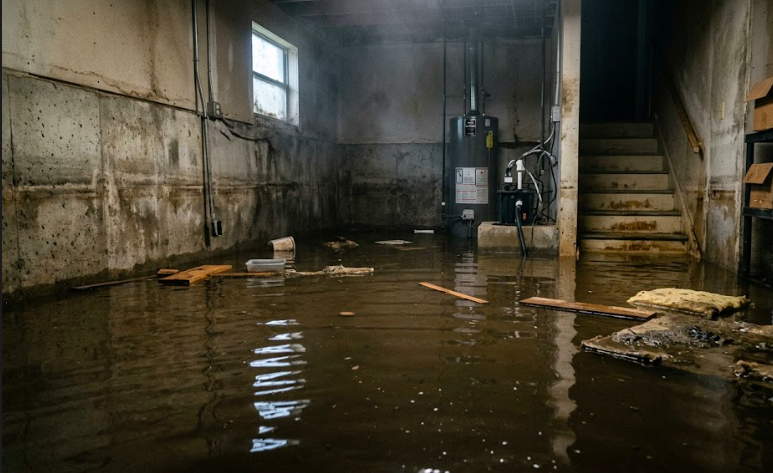
If you own a home in Lake Charles, Louisiana, you already know the relationship between this city and water. It rains hard here. Hurricanes come through. And when they do, the water does not stay outside.
NOAA Climate.gov reported that on May 17, 2021, Lake Charles received 12.49 inches of rain in a single day six of those inches falling in just two hours making it the third-wettest day in the city’s recorded history. That event alone triggered over 100 rescue calls and flooded hundreds of homes across Calcasieu Parish. And that came just months after Hurricanes Laura and Delta had already driven residents from their properties.
The point is not to alarm you. The point is that for Lake Charles homeowners, understanding the causes of basement and lower-level flooding is not a theoretical exercise it is practical, essential knowledge.
This guide walks through every major cause of basement flooding, what each one looks like in a Lake Charles property specifically, how to reduce your risk, and what to do immediately if your basement takes on water.
Why Basements in Lake Charles Are Especially Vulnerable
Most of the country thinks of basement flooding as a snowmelt or spring rain problem. In Lake Charles, the threat is year-round and multi-directional.
The city sits in the Gulf Coast subtropical climate zone. The soil in much of Calcasieu Parish has high clay content, which means it expands when wet and does not drain quickly. Hydrostatic pressure the outward force that saturated soil exerts against foundation walls builds fast during heavy rain events and pushes water through any available gap in your foundation.
Add to that the region’s flat topography, the frequency of tropical weather systems from June through November, and the aging infrastructure in neighborhoods like Downtown Lake Charles, Prien Lake, and Westlake and you have a combination that makes lower-level flooding one of the most common property damage claims in Southwest Louisiana.
Understanding which specific mechanism caused your basement to flood determines both your immediate response and the long-term fix. Here are the most common causes.
1. Poor Foundation Sealing and Cracks
Your basement sits below grade. The only thing standing between the surrounding soil which is constantly holding moisture and your interior space is the foundation wall and whatever waterproofing was applied when the home was built.
In older Lake Charles homes, that waterproofing has often degraded. Asphalt-based sealants applied in the 1970s and 1980s crack and lose adhesion over time. Poured concrete foundations develop hairline cracks from settling. Block foundations are particularly prone to mortar joint failure, which creates dozens of small entry points for water.
What it looks like: Basement walls that are damp to the touch even when it hasn’t rained recently. White chalky deposits (efflorescence) on the interior of foundation walls this is mineral residue left behind by water moving through concrete. Actual water seeping through visible cracks during or after rain events.
Lake Charles factor: The clay-heavy soil in Calcasieu Parish expands significantly when saturated, exerting lateral pressure on foundation walls. This movement accelerates crack formation in aging foundations, making this one of the most common causes of gradual basement flooding in the area.
What to do: Have a foundation waterproofing specialist assess the exterior drainage and apply a modern waterproof membrane or crystalline coating to the foundation. Interior sealants treat symptoms exterior waterproofing addresses the cause.
2. Drainage Tile and French Drain Failure
Every properly built home in a wet climate should have a perimeter drainage system a network of perforated pipe buried around the foundation that collects groundwater and channels it away from the structure before it reaches the foundation wall.
These systems fail for several reasons. The pipes become clogged with soil, tree roots, or sediment over time. The gravel surrounding the pipe compacts and loses its drainage capacity. In older homes, clay drainage tile the predecessor to modern perforated PVC simply disintegrates.
What it looks like: Basement flooding that occurs specifically during or after heavy rain, often entering at the base of the wall where the floor meets the foundation. Water may appear to “well up” through the floor slab in severe cases.
Lake Charles factor: During a storm event that drops several inches of rain in a short period which is not uncommon here even a partially functioning drainage system can be overwhelmed. A drainage tile system that performs adequately in light rain may fail completely when the ground becomes fully saturated during a Gulf storm.
What to do: Drainage tile failure requires professional diagnosis. A contractor can run a camera through the perimeter drain to assess its condition and determine whether cleaning or full replacement is needed. This is not a DIY repair.
3. Improper Grading Around the Foundation
The slope of the soil around your home is called the grade. Proper grading directs water away from the foundation every inch of soil within the first ten feet of the house should slope downward, away from the structure, at a minimum grade of 6 inches over that distance.
When the grade is flat or worse slopes toward the house, every rainstorm channels water directly toward your foundation walls. Over time, even small amounts of pooling water near the foundation will find a way in.
What it looks like: Standing water visible near the foundation during or after rain. Landscaping that appears level with or higher than the interior basement floor. Consistent basement moisture on a single wall usually the wall closest to the area where water pools.
Lake Charles factor: Many older lots in Lake Charles were developed before current grading standards, and years of landscaping additions raised garden beds, patios, added soil can reverse a proper grade over time. The flat terrain throughout much of Calcasieu Parish also means there is little natural slope to work with.
What to do: Regrading the soil around the foundation is a manageable exterior project. Fill low spots with compacted clay-type soil rather than topsoil or mulch, which retains water. Ensure that all hardscaping concrete patios, walkways, driveways slopes away from the structure. In severe cases, a drainage contractor can install a swale or surface drainage channel.
4. Clogged or Damaged Gutters and Downspouts
Your gutters exist for one purpose: to collect rainwater from the roof and move it away from the foundation. When they fail, all of that water which the roof surface concentrates from hundreds of square feet of collection area drops directly next to your foundation walls.
Gutters fail in two ways. They become clogged with leaves, pine needles, seed pods, and debris, causing water to overflow over the side. Or the downspouts are too short, damaged, or discharge too close to the foundation, depositing water right at the base of the wall.
What it looks like: Water staining on the exterior walls below the gutterline. Erosion channels in the soil directly below the gutters. Basement moisture or seepage on the wall directly below a downspout or gutter run.
Lake Charles factor: Lake Charles and the surrounding Calcasieu Parish area have significant tree canopy particularly live oaks, pine, and sweet gum that deposit leaves, needles, and seed pods into gutters throughout the year. Unlike northern climates where gutters clog primarily in fall, Gulf Coast gutters can become obstructed in any season.
What to do: Clean gutters at minimum twice per year spring and fall and inspect after major storm events. Downspout extensions should discharge at least five to six feet from the foundation wall, and the water should flow away from the home, not toward it. Check 15 minutes into a heavy rain to confirm your gutters are managing flow properly and not overflowing.
5. Sump Pump Failure
If your Lake Charles home has a basement or crawl space with a sump pit, the sump pump is your last line of defense against rising groundwater. When the pump fails due to age, power outage, mechanical breakdown, or simply being overwhelmed by volume water that would otherwise be expelled accumulates and floods the lower level.
Sump pumps have a typical lifespan of 7 to 10 years. Many homeowners do not realize their pump has failed until they are standing in water. During a major storm event, even a functioning pump can be outpaced if the groundwater rises faster than the pump can expel it.
What it looks like: Standing water in the basement or at the base of the sump pit. A running pump that is not keeping pace with incoming water. A pump that does not activate at all when the float switch is triggered.
Lake Charles factor: The combination of high clay-content soil, a shallow water table in parts of Calcasieu Parish, and the frequency of intense rainfall events means that sump pumps in Lake Charles homes work harder and more frequently than in most of the country. Annual inspection is not optional here it is necessary.
What to do: Have your sump pump professionally inspected once per year, before hurricane season begins. Install a battery backup system so the pump continues operating during power outages which frequently accompany the same storms that cause flooding. For homes in areas with recurring groundwater problems, consider a secondary backup pump. Our team provides emergency sump pump installation and repair for Lake Charles homeowners when their system fails during or after a storm event.
6. Water Supply Line and Hot Water Tank Failure
Not all basement flooding comes from outside. Some of the most severe and fastest-developing water damage in a home originates from internal plumbing failure in the basement itself.
A water supply line that bursts due to aging pipes, water pressure surges, or corrosion can discharge hundreds of gallons per hour directly into the basement space. A failing water heater can fail catastrophically, releasing its entire tank volume onto the floor. A slow leak from corroded pipe fittings can saturate the subfloor and surrounding materials for weeks before being detected.
What it looks like: Sudden standing water with no storm or weather event. Water accumulating near the water heater or along a wall where supply lines run. Unexplained increases in water utility bills that suggest a hidden leak.
Lake Charles factor: Lake Charles water supply infrastructure includes areas with older galvanized pipe in homes built before the 1970s. Galvanized pipe corrodes from the inside out over decades, restricting flow and eventually failing. The high humidity environment in Gulf Coast basements also accelerates corrosion on metal fittings and connections.
What to do: Have your water heater inspected annually and replace it proactively at the end of its rated service life typically 8 to 12 years for tank-style heaters. If your home has older galvanized supply lines, consult a licensed plumber about repiping. Water leak detection sensors placed near the water heater and along supply line runs provide early warning before a small failure becomes a flood.
7. Sewage Backup
Sewage backup is one of the most serious forms of basement flooding because the water involved classified as Category 3 or “black water” contains pathogens, bacteria, and contaminants that make the space immediately hazardous to occupants.
Sewage backup occurs when the main sewer line serving the property becomes blocked, when the municipal sewer system becomes overwhelmed during heavy rain events and backs up into residential lines, or when tree roots infiltrate and obstruct the sewer lateral.
What it looks like: Dark, foul-smelling water entering the basement through floor drains, toilets, or other low-point fixtures. Multiple drains backing up simultaneously throughout the home.
Lake Charles factor: During extreme rain events the kind Lake Charles experiences during tropical weather systems municipal sewer systems in older parts of the city can reach capacity and reverse-flow into connected properties. This is a documented phenomenon in communities across Southwest Louisiana and is a direct consequence of the storm volumes the region absorbs.
What to do: Do not enter a space with sewage backup without proper protective equipment. Do not attempt to clean it yourself. Sewage backup requires professional remediation under biohazard protocols the water must be extracted, all affected porous materials removed, and the space disinfected before it is safe to reoccupy. Contact a certified water damage restoration company immediately.
8. Flood Water Intrusion from Storms and Hurricanes
When a major storm or hurricane delivers several inches of rain over a short period, water can enter basements and lower-level spaces through mechanisms that would otherwise be adequately controlled simply because the volume overwhelms every drainage system simultaneously.
Overland flooding surface water moving across the ground and entering through basement windows, window wells, doorways, or foundation gaps is distinct from groundwater seepage and requires different mitigation strategies.
What it looks like: Water entering rapidly through multiple points simultaneously, often during or immediately after a major storm. The water may carry debris, silt, or discoloration consistent with surface runoff.
Lake Charles factor: Calcasieu Parish has designated flood zones across much of its developed area. Homes in FEMA-designated AE or X zones face different flood probability profiles, and understanding which zone your property sits in directly affects your flood insurance requirements and risk level. Check your current flood zone designation at the FEMA Flood Map Service Center.
What to do: For properties in active flood zones, flood mitigation measures flood vents, flood barriers, properly elevated mechanical systems reduce but cannot eliminate risk during major storm events. If your basement floods during a hurricane or major rain event, do not enter the space until you have confirmed there are no electrical hazards. Contact a professional water damage restoration company for emergency extraction and drying.
What to Do Immediately After Your Basement Floods
Regardless of which cause is behind your flooded basement, the immediate response sequence is the same:
1. Confirm it is safe to enter: If there is any possibility of electrical equipment, outlets, or wiring in contact with the water, do not enter the space until the circuit breakers serving the basement are confirmed off. If in doubt, wait for a professional.
2. Identify and stop the water source if possible: If the flooding is from a broken supply line or appliance, shut off the water supply to the home at the main shutoff valve.
3. Call a professional water damage restoration company immediately: Mold can begin developing within 24 to 48 hours in Lake Charles’s humid climate. Every hour of delay increases both the depth of damage and the cost of restoration. Do not wait to see if it dries on its own it will not.
4. Document everything before cleanup begins: Photograph the water level, the affected materials, and the entry points. This documentation is essential for your insurance claim.
5. Do not use a standard shop vacuum on sewage or heavily contaminated water: Category 2 or Category 3 water requires professional extraction equipment and appropriate disposal. Using residential equipment spreads contamination and creates additional health risk.
Professional Water Damage Restoration in Lake Charles
At Lake Charles LA Water Damage, we respond to basement flooding emergencies 24 hours a day, 7 days a week across Calcasieu Parish and the surrounding Southwest Louisiana communities.
Our certified technicians use industrial extraction equipment, thermal imaging cameras, and calibrated moisture meters to find every pocket of water including water you cannot see, hidden inside walls, beneath flooring, and in crawl space framing. We monitor the drying process daily with documented moisture readings, and we work directly with all major insurance carriers to support your claim from the first call through final clearance.
Whether your basement flooded from a storm, a broken pipe, a failed sump pump, or a sewage backup, we have the equipment and certification to restore it safely and completely.
Call us 24/7 for emergency basement flooding response in Lake Charles, LA.
Know Your Risk Before the Next Storm
The most important thing a Lake Charles homeowner can do is not wait for a flood to understand their vulnerability. Walk the exterior of your home after the next heavy rain and observe where water moves. Check your gutters. Look at the grade. Test your sump pump. Know your FEMA flood zone. And have a water damage restoration company’s number saved in your phone.
When water gets in, the clock starts immediately. The homeowners who come out of a basement flooding event with the least damage and the lowest repair bills are always the ones who called first.
Leave a Reply