A sudden rainstorm in Lake Charles can turn a cozy home into a nightmare if your roof develops a leak. Water damage from roof leaks often starts subtly, creeping into walls, ceilings, and floors, leading to costly repairs if ignored. Homeowners in our humid Louisiana climate face this issue more frequently due to heavy rains and high winds from tropical storms. At Lake Charles Rapid Restore, we’ve helped countless residents identify and mitigate these problems before they escalate. In this post, we’ll guide you through the key signs to watch for, practical steps to take, and mistakes to avoid, empowering you to protect your property effectively.
Understanding the Signs of Roof Leak Water Damage
Roof leaks don’t always announce themselves with a dramatic drip; they can be insidious, causing hidden damage that worsens over time. Water from a compromised roof—whether due to cracked shingles, worn flashing, or clogged gutters—seeps into your home’s structure, leading to rot, mold growth, and structural weakening. In Lake Charles, where our subtropical weather brings frequent downpours, these leaks are a common culprit for water damage claims. Recognizing the signs early allows for timely intervention, preventing minor issues from becoming major headaches.
Here are the primary indicators of roof leak water damage:
-
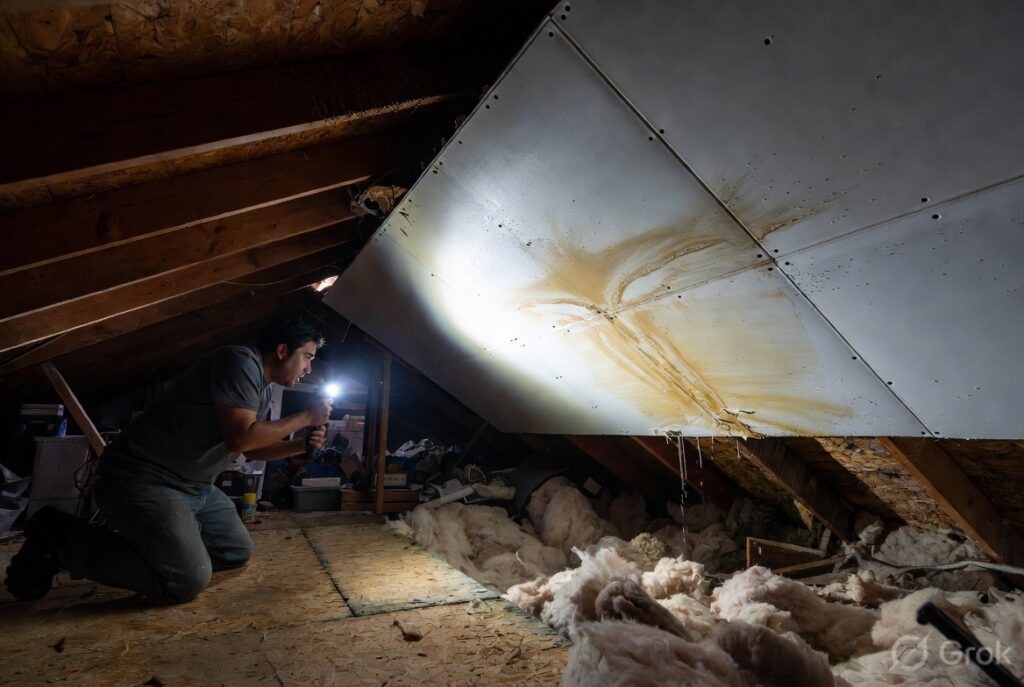
Water Stains on Ceilings and Walls: One of the most visible signs is discolored patches, often yellowish-brown, appearing after rain. These stains form as water migrates through the ceiling material. If you notice them expanding or darkening, it’s a red flag for ongoing leakage.
-
Sagging or Bubbling Ceilings: Excess moisture weakens drywall or plaster, causing it to sag or bubble. This is particularly dangerous in attics or upper floors, where leaks might go unnoticed until the ceiling threatens to collapse.
-
Musty Odors and Mold Growth: A persistent damp smell signals hidden water intrusion. In our humid environment, mold thrives quickly—within 24-48 hours—posing health risks like respiratory issues. Check for black or green spots on walls, insulation, or wooden beams.
-
Warped or Buckled Flooring: If water reaches your floors, especially in upper levels, you’ll see cupping or buckling in hardwood or laminate. Carpet may feel squishy or develop dark patches.
-
Damaged Insulation and Structural Elements: Peeling paint, corroded nails, or soft spots in rafters indicate deeper penetration. Over time, this compromises your home’s integrity, potentially leading to costly structural fire damage repair if electrical issues arise from wet wiring.
- Granules in Gutters: Shingle debris in your gutters suggests deteriorating roofing material, often the precursor to leaks.
In our experience at Lake Charles Rapid Restore, many homeowners overlook attic signs until mold spreads. We’ve seen cases in areas like Oak Park where heavy rains exacerbate leaks in older homes with asphalt shingle roofs. Understanding these signs isn’t just about spotting problems—it’s about safeguarding your investment against Lake Charles’ unpredictable weather.
How to Inspect and Address Roof Leak Water Damage
Once you suspect a roof leak, a systematic inspection can confirm the issue and guide your next steps. Start by safety: If you’re uncomfortable on your roof, hire a professional. In Lake Charles, local building codes require permits for roof work, and our frequent storms mean ladders can be risky on wet surfaces. Focus on prevention and early detection to minimize damage.
Begin with a visual roof check after rain:
-
Examine the Exterior: Use binoculars to scan for missing shingles, cracks in flashing around chimneys or vents, and loose tiles. Look for dark streaks or moss, which indicate moisture buildup.
-
Inspect the Attic: Shine a flashlight on insulation, rafters, and sheathing for wet spots or daylight peeking through. Feel for dampness—drywall should feel firm, not spongy.
- Check Interior Rooms: Look under sinks, around windows, and in closets for unexplained moisture. Use a moisture meter (available at hardware stores) to detect hidden water in walls.
For addressing the damage, act fast:
-
Temporary Fixes: Place buckets under drips and tarp large roof holes. Clear gutters to improve drainage—clogged ones are a top cause in our rainy season.
-
Dry Out Affected Areas: Use fans and dehumidifiers to reduce humidity. In Lake Charles’ muggy air, this is crucial to prevent mold growth from water leaks cleanup.
- Professional Assessment: If damage extends beyond surface level, call experts. Local factors like our clay-heavy soils can cause foundation shifts, worsening leaks in homes in Graywood.
Pro Tip: Test for leaks by spraying your roof with a garden hose while someone watches the attic. This simulates rain without waiting for a storm, but avoid if thunder is forecast—safety first in our volatile weather.
These steps not only identify problems but also comply with Louisiana’s insurance requirements for water damage claims. By staying proactive, you can extend your roof’s life and avoid emergency situations.
Common Mistakes to Avoid with Roof Leak Water Damage
Homeowners often make errors when dealing with roof leaks that amplify the damage and costs. Ignoring early signs is the biggest pitfall—waiting for a small stain to "dry out" allows water to spread, leading to mold infestation and structural rot. In Lake Charles, where humidity levels hover above 70%, untreated leaks can double repair bills within weeks.
Another frequent mistake is DIY repairs without proper tools or knowledge. Patching a hole with tape might stop a drip temporarily, but it fails to address underlying issues like poor ventilation, inviting more leaks during hurricane season. This can void warranties and complicate insurance payouts.
Overlooking related damage is also common. For instance, focusing only on the ceiling ignores how water affects electrical systems, risking fires, or how it warps cabinets, necessitating cabinet repair/restoration. Financially, delaying professional help can turn a $500 fix into $5,000+ in comprehensive restoration, including flooded basement cleanup if water migrates downward.
Safety risks are severe too: Climbing a slippery roof without harnesses has led to injuries in our area. Always prioritize pros for assessments to avoid health hazards from mold exposure or collapse dangers.
Conclusion
Spotting signs of roof leak water damage early— from stains and odors to sagging ceilings—can protect your home and wallet in Lake Charles’ challenging climate. By understanding these indicators, inspecting regularly, and avoiding pitfalls like delayed action, you empower yourself to act decisively. Remember, local weather patterns make vigilance key here.
If DIY feels overwhelming or damage is extensive, Lake Charles Rapid Restore is ready to assist with expert water damage restoration. Our team, detailed on our About Us page, specializes in swift, reliable service for properties across the region, including North Moss Bluff. Don’t let leaks linger—contact us for peace of mind.
Need help with signs of roof leak water damage in your home in Lake Charles? Call Lake Charles Rapid Restore today at (337) 454-5084.
Leave a Reply